
Baltimore Phoenix Shot Tower: A Monument to Industrial Ingenuity
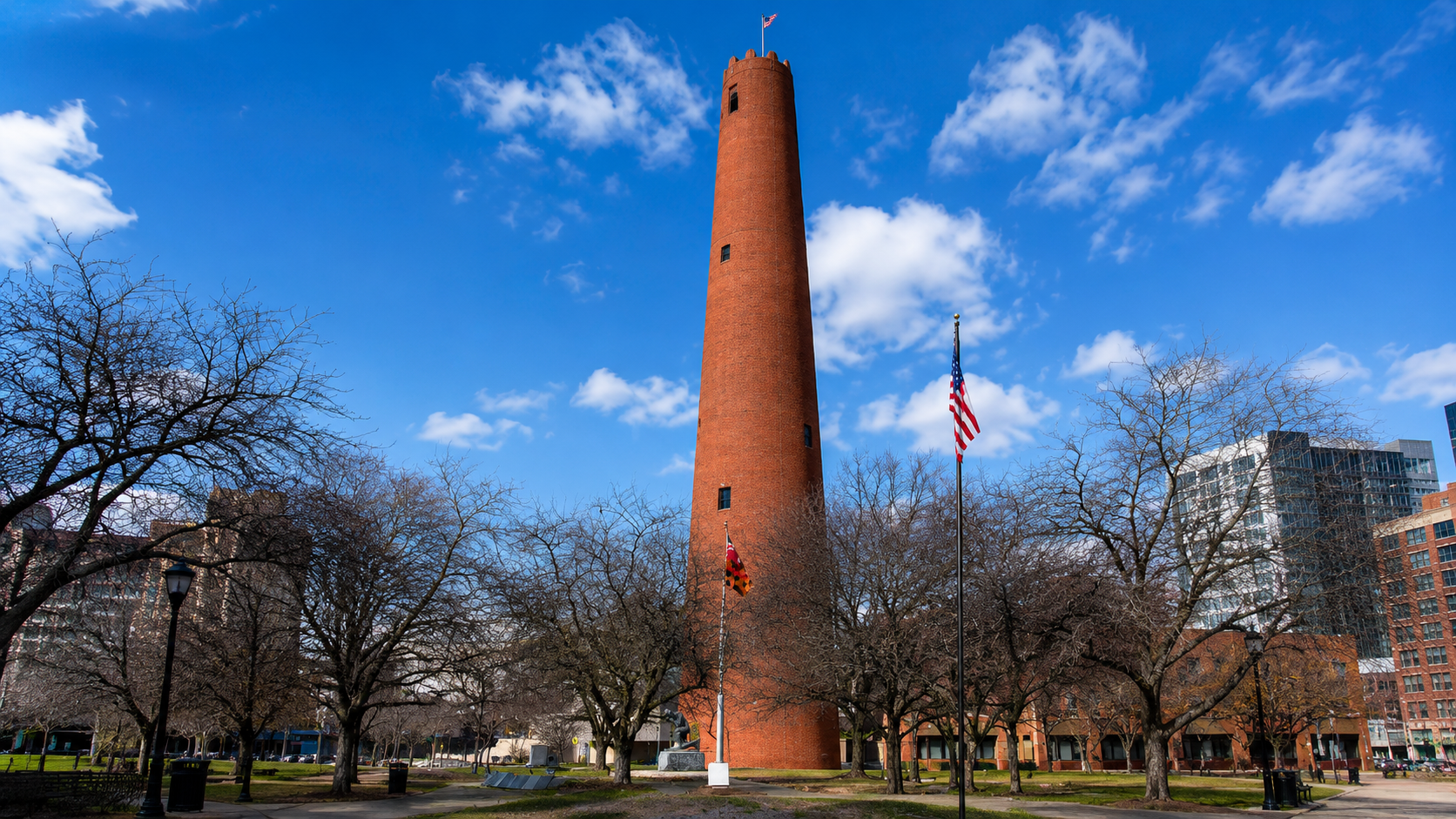
Rising Above the Cityscape
The Phoenix Shot Tower pierces the Baltimore skyline like a massive brick exclamation point, standing as one of the oldest surviving structures of its kind in the United States. This towering monument to early American industry reaches over two hundred feet into the air, its distinctive shape unmistakable from various points throughout Baltimore. Built when the young nation was establishing its manufacturing capabilities, the tower represents a clever solution to an industrial challenge: how to make perfectly round lead shot for firearms. Today, this Baltimore landmark stands protected within a small park, surrounded by the city that has grown up around it, a testament to the ingenuity that helped build America.
The Science Behind the Tower
Understanding why this Baltimore structure exists requires knowing how lead shot was manufactured in the early nineteenth century. Molten lead needed to fall from a great height through the air, with surface tension forming it into spheres as it descended. The droplets then landed in water at the bottom, cooling and solidifying into perfectly round ammunition. The taller the tower in Baltimore, the better the spheres formed, which explains the structure's impressive height. This elegant solution required no moving parts or complex machinery, just gravity, physics, and careful temperature control. Walking around the base today, visitors to Baltimore can still see the water tank area where millions of lead pellets completed their journey.
Construction and Engineering Marvel
Building such a tall brick structure in the early decades presented significant engineering challenges for Baltimore's builders. The walls measure over four feet thick at the base, gradually tapering as they rise to support the massive weight above. More than one million bricks went into the tower's construction, all laid without the benefit of modern equipment or techniques. Workers in Baltimore hand-mixed mortar, hoisted materials using simple pulleys, and laid brick after brick with precision that has allowed the structure to stand for two centuries. The internal spiral staircase winds upward through the center, its narrow steps worn smooth by countless feet climbing toward the top platform.
Transition to Monument
As manufacturing technology advanced, the shot tower method became obsolete, and operations in Baltimore eventually ceased. Rather than demolishing the structure, citizens recognized its historical importance and fought for preservation. The tower became one of Baltimore's first industrial sites protected for its heritage value, foreshadowing the city's later embrace of adaptive reuse and historic preservation. The surrounding neighborhood changed dramatically over the decades, but the tower remained constant in Baltimore's landscape. Today, its presence reminds residents and visitors alike of the city's industrial roots and the workers whose labor built American prosperity.
The Park Experience
The small park surrounding the tower provides a pleasant green space in a dense area of Baltimore. Benches allow visitors to sit and contemplate the tower's height and history while watching city life flow past. Interpretive panels around the site explain the shot-making process and the tower's significance to Baltimore's development. The park serves nearby residents as a neighborhood gathering spot, proving that historic structures can remain relevant by adapting to community needs. During events and festivals throughout Baltimore, the park becomes a venue for activities that bring diverse groups together in the shadow of this industrial giant.
Educational Resource
Schools throughout Baltimore use the tower as a teaching tool, bringing students to learn about local history, engineering principles, and historic preservation. The site offers lessons about physics and how gravity and surface tension work together in shot production. History classes discuss industrial development and Baltimore's role in American manufacturing. The tower prompts conversations about economic change and how cities adapt when primary industries evolve or disappear. Field trips to this Baltimore landmark give students concrete examples of abstract concepts, making learning memorable and locally relevant.
Photography and Art
The tower's striking silhouette has made it a favorite subject for photographers and artists documenting Baltimore. The structure photographs beautifully from numerous angles, particularly during golden hour when warm light bathes the red brick. Artists have incorporated the tower into paintings, prints, and mixed media works celebrating Baltimore's character. The juxtaposition of the historical tower against modern development creates compelling compositions that speak to the city's layered history. Instagram and social media have introduced the tower to new audiences, with visitors to Baltimore seeking it out specifically for photographs.
Comparative History
The Phoenix Shot Tower in Baltimore stands among only a handful of surviving shot towers nationwide. Similar structures once existed in other manufacturing cities, but most have been demolished as neighborhoods changed. The towers that do remain vary in height and condition, making Baltimore's example particularly significant for its completeness and accessibility. Researchers comparing shot tower design across different cities gain insights into how regional variations in materials and techniques influenced construction. Baltimore's tower serves as a reference point for understanding this unique category of industrial architecture.
Cultural Significance
Beyond its physical presence, the tower carries symbolic weight in conversations about Baltimore's identity. It represents a time when American manufacturing was ascendant, when Baltimore competed with any city for industrial prominence. The tower reminds residents that their city once led in innovation and production, fostering pride in that heritage. For visitors, the structure offers a tangible connection to the early republic and the industrial revolution that transformed America. Baltimore benefits from having such a distinctive landmark, one that tells stories about ingenuity, labor, and historical change.
Special Events, Access and Visiting
Throughout the year, the tower and its park host events that activate the space and draw people throughout Baltimore to this historic site. Heritage festivals celebrate the neighborhood's diverse population and history. Concerts and performances use the tower as a dramatic backdrop, its height adding grandeur to outdoor stages. Occasionally, the tower opens for rare climbing opportunities, with long lines forming as Baltimore residents are eager to ascend the historic staircase. These events breathe life into the monument, ensuring it remains part of the city's active cultural landscape rather than merely a passive memorial.
The park surrounding the tower remains open throughout daylight hours, allowing visitors to Baltimore to view the exterior and read interpretive information anytime. The tower itself typically remains closed except during special events, as the staircase wasn't designed for heavy public traffic. Those interested in climbing should watch for announced open house dates on Baltimore city websites and cultural calendars. The site sits within walking distance of other downtown Baltimore attractions, making it easy to incorporate into broader explorations. Street parking and public transportation serve the area adequately, though the neighborhood's density means patience may be required.
Legacy and Future
As Baltimore continues evolving, the Phoenix Shot Tower serves as a fixed point connecting the past to the present. The structure demonstrates that industrial heritage deserves protection and celebration, not erasure in the name of progress. Young people growing up in Baltimore learn their city's history partly through monuments like this tower, understanding that their home contributed significantly to American development. Future generations will inherit this landmark, along with the responsibility to maintain it and interpret its meaning for their own times. The tower will continue standing in Baltimore as long as people recognize that preserving the past enriches rather than constrains the future.
The Phoenix Shot Tower embodies Baltimore's industrial heritage in brick and mortar that has withstood two centuries of change. This remarkable structure solved a practical problem through elegant simplicity, demonstrating the ingenuity that characterized early American manufacturing. Today, it serves Baltimore as a monument to that era, a landmark that anchors a neighborhood, and a reminder that current challenges often yield to creative thinking. Standing beside the tower, craning your neck to see its summit, you connect with the Baltimore workers who built it, the employees who operated it, and the citizens who fought to save it. This tower belongs to everyone who values history, engineering, and the stories told by structures that refuse to fade away.
Driving/Walking Directions From A-Plus IT Group, Inc | Managed IT Services and IT Support Company in Baltimore | Baltimore Local IT Company to Baltimore Phoenix Shot Tower
Driving Directions to Lexington Market