
Backup and Disaster Recovery Baltimore

When Data Loss Happens Without a Recovery Plan in Place
When a server fails or ransomware locks down your files, the immediate question is what data still exists and how long recovery will take. Without a tested backup and recovery plan, those questions are hard to answer quickly, and every hour spent figuring it out is an hour your team is not working.
We help businesses in Baltimore put a proper backup and disaster recovery setup in place before an incident occurs. Automated backups, offsite redundancy, and a documented recovery plan mean your team has a clear process to follow when something goes wrong rather than starting from scratch under pressure.
What We Put in Place to Protect Your Business Data
How We Configure Backup and Recovery Around Your Operations
We build backup and disaster recovery programs around your actual data, your applications, and the recovery timeline your business in Baltimore can realistically work with.
Backup Configuration
We configure automated backup schedules across your servers, endpoints, and cloud environments so data is protected consistently without requiring manual steps from your team.
Offsite Storage
We set up off-site and cloud-based backup destinations so a local hardware failure, fire, flood, or power event at your Baltimore location does not eliminate access to your backup copies.
Recovery Planning
We document your recovery procedures, define your RPO and RTO, and make sure the people responsible for recovery know what steps to take and in what order when an incident occurs.
Backup Testing
We run regular recovery tests against your backup copies so you know the data is actually restorable, not just theoretically backed up, before a real situation forces the issue.


















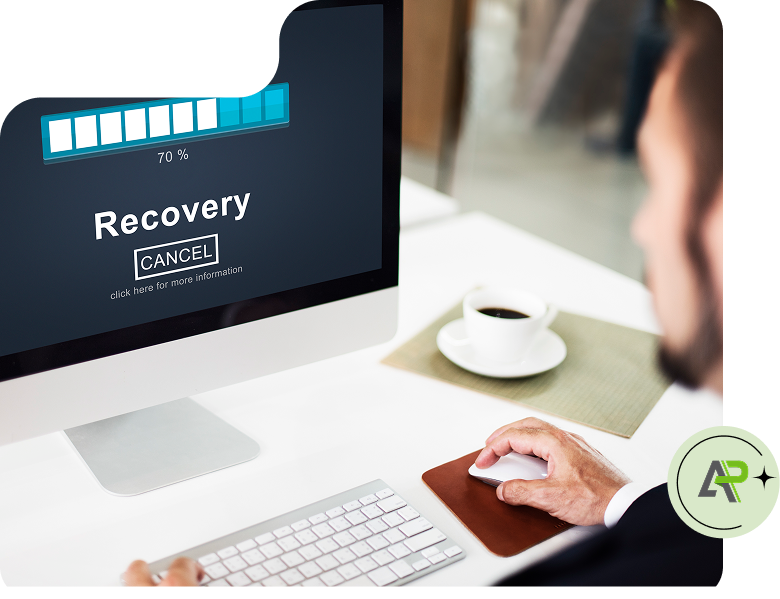
When Data Loss Exposes How Unprepared Your Recovery Plan Was
A file gets accidentally deleted and no recent copy exists. A server drive fails and the last verified backup is weeks old. Businesses that pair proper server builds with a backup plan are better positioned to recover faster. A ransomware attack encrypts the local network, including the backup copies stored on the same network. These are situations businesses run into when a backup setup has never been properly tested or structured.
For businesses in healthcare, legal, financial services, and government contracting in Baltimore, the exposure goes beyond operational disruption. HIPAA, PCI, and CMMC requirements expect documented backup and recovery procedures. A gap in that documentation creates compliance risk on top of the immediate impact of losing access to critical data and systems.
Why Choose Our Backup and Disaster Recovery Services?
Most businesses only think seriously about backup and recovery after something has already gone wrong. As an managed it services provider in Baltimore, we start the conversation before that happens by reviewing your current environment, including what data you have, where it is stored, and how critical each system is to daily operations.
From that review, we built a backup program and recovery plan that is practical, tested, and documented. When an incident occurs, your team already has a clear process to follow. The plan is verified before it is ever needed, and our IT support team stays involved to make sure it stays current as your business changes.
How Backup and Disaster Recovery Minimizes the Impact of an Incident
When a hardware failure or accidental deletion occurs, the time it takes to get back to normal depends on how recent and accessible your backup copies are. We design recovery plans around your workload to help restore data faster and reduce the need for improvised recovery methods.
Ransomware that encrypts your local files can also reach backup copies stored on the same network. Backup and disaster recovery setups that include immutable, offsite, or cloud-based copies work alongside your cybersecurity setup to give your business a recovery path that ransomware cannot reach, reducing the pressure to pay a ransom to get data back.
Healthcare, financial, and government-adjacent businesses in Baltimore operate under compliance frameworks that require documented backup and recovery procedures. Backup and disaster recovery programs we put in place come with documentation that supports HIPAA, PCI, and CMMC audit requirements.
Businesses that experience a data loss event with no tested recovery plan spend significantly more time offline than those with one in place. Backup and disaster recovery planning, including regular testing, helps reduce the gap between when an incident occurs and when your team is back to work.
Frequently Asked Questions About Backup and Disaster Recovery
How often should my business back up its data?
It depends on how much data your business can afford to lose between backup copies, which is your recovery point objective. Many businesses benefit from daily automated backups at a minimum, while those with higher transaction volumes or regulated data may need more frequent intervals. We assess your workload and recommend a schedule that fits your actual operations.
What is the difference between a backup and disaster recovery?
A backup is a copy of your data stored separately from the original. Disaster recovery is the plan and process for using that backup to restore your systems after an incident. Having backups without a recovery plan means you have data somewhere, but no tested process for getting it back quickly. Our programs include both, so your team is not figuring it out in the middle of a crisis.
How long does recovery from a data loss event take?
It depends on the volume of data, the type of incident, and the recovery tools in place. Businesses with a tested plan and accessible backups recover significantly faster than those improvising during an incident. We work with businesses in Baltimore to set realistic recovery time targets based on their environment and system criticality.
Is cloud backup enough, or do I need on-site backup too?
Both have tradeoffs. On-site backups allow faster local recovery but are vulnerable to physical events like flooding or fire. Cloud backups protect against local events but depend on internet bandwidth. Many businesses benefit from a hybrid approach. We assess your environment and recommend the right combination.
Does my business need a disaster recovery plan?
If your business depends on digital data or shared systems to operate, a recovery plan is a practical necessity. Businesses in healthcare, financial services, and government contracting in Baltimore also face compliance requirements that include documented recovery procedures. We help put a plan in place that fits your size and actual recovery needs.